When coffee reached Istanbul, it spread rapidly among the people.
However, coffeehouses were not just places to drink coffee.
They were spaces where people talked, debated, and exchanged ideas.
For the state, this was seen as a potential threat.
As a result, during different periods:
Coffeehouses were closed
Drinking coffee was forbidden
Some people were punished for consuming it
What we casually say today — “let’s have a coffee” —
was once a banned habit.
Who was served coffee in the Ottoman palace?
In the Ottoman palace, coffee was not served to everyone.
It was reserved for special moments and important people.
Coffee was offered to:
The sultan
The Valide Sultan
The Haseki Sultan
High-ranking state officials
On special occasions, foreign ambassadors
Serving coffee was a sign of respect and prestige.
Coffee was usually served after meals, during private meetings or calm palace moments, helping conversations continue in a relaxed atmosphere.
How did Kanuni Sultan Suleiman and Hürrem Sultan drink coffee?
During Kanuni’s reign, coffee had become an established palace tradition.
Kanuni Sultan Suleiman preferred his coffee:
With little or no sugar
Simple and balanced
During moments of reflection
For him, coffee helped clear the mind.
Hürrem Sultan, on the other hand:
Preferred a smoother taste
Always accompanied by sweets or Turkish delight
Treated coffee as part of conversation and intimacy
For her, presentation was just as important as flavor.
Did coffee fortune-telling exist in the palace?
Yes — but not as an official ritual.
Coffee fortune-telling in the palace:
Was informal and recreational
Practiced mostly among palace women
Never influenced political decisions
It was a social tradition, driven by curiosity and imagination.
More than just coffee
In the Ottoman palace, coffee was consumed slowly and quietly.
It was never rushed.
Perhaps this is why Turkish coffee is still associated with patience, tradition, and meaning.
When coffee reached Istanbul, it spread rapidly among the people.
However, coffeehouses were not just places to drink coffee.
They were spaces where people talked, debated, and exchanged ideas.
For the state, this was seen as a potential threat.
As a result, during different periods:
Coffeehouses were closed
Drinking coffee was forbidden
Some people were punished for consuming it
What we casually say today — “let’s have a coffee” —
was once a banned habit.
Who was served coffee in the Ottoman palace?
In the Ottoman palace, coffee was not served to everyone.
It was reserved for special moments and important people.
Coffee was offered to:
The sultan
The Valide Sultan
The Haseki Sultan
High-ranking state officials
On special occasions, foreign ambassadors
Serving coffee was a sign of respect and prestige.
Coffee was usually served after meals, during private meetings or calm palace moments, helping conversations continue in a relaxed atmosphere.
How did Kanuni Sultan Suleiman and Hürrem Sultan drink coffee?
During Kanuni’s reign, coffee had become an established palace tradition.
Kanuni Sultan Suleiman preferred his coffee:
With little or no sugar
Simple and balanced
During moments of reflection
For him, coffee helped clear the mind.
Hürrem Sultan, on the other hand:
Preferred a smoother taste
Always accompanied by sweets or Turkish delight
Treated coffee as part of conversation and intimacy
For her, presentation was just as important as flavor.
Did coffee fortune-telling exist in the palace?
Yes — but not as an official ritual.
Coffee fortune-telling in the palace:
Was informal and recreational
Practiced mostly among palace women
Never influenced political decisions
It was a social tradition, driven by curiosity and imagination.
More than just coffee
In the Ottoman palace, coffee was consumed slowly and quietly.
It was never rushed.
Perhaps this is why Turkish coffee is still associated with patience, tradition, and meaning. Coffee in the Ottoman Palace: From Forbidden Drink to Royal Ritual
February 13, 2026
By
Admin User
926
views
Outside, it is raining.
The village is quiet.
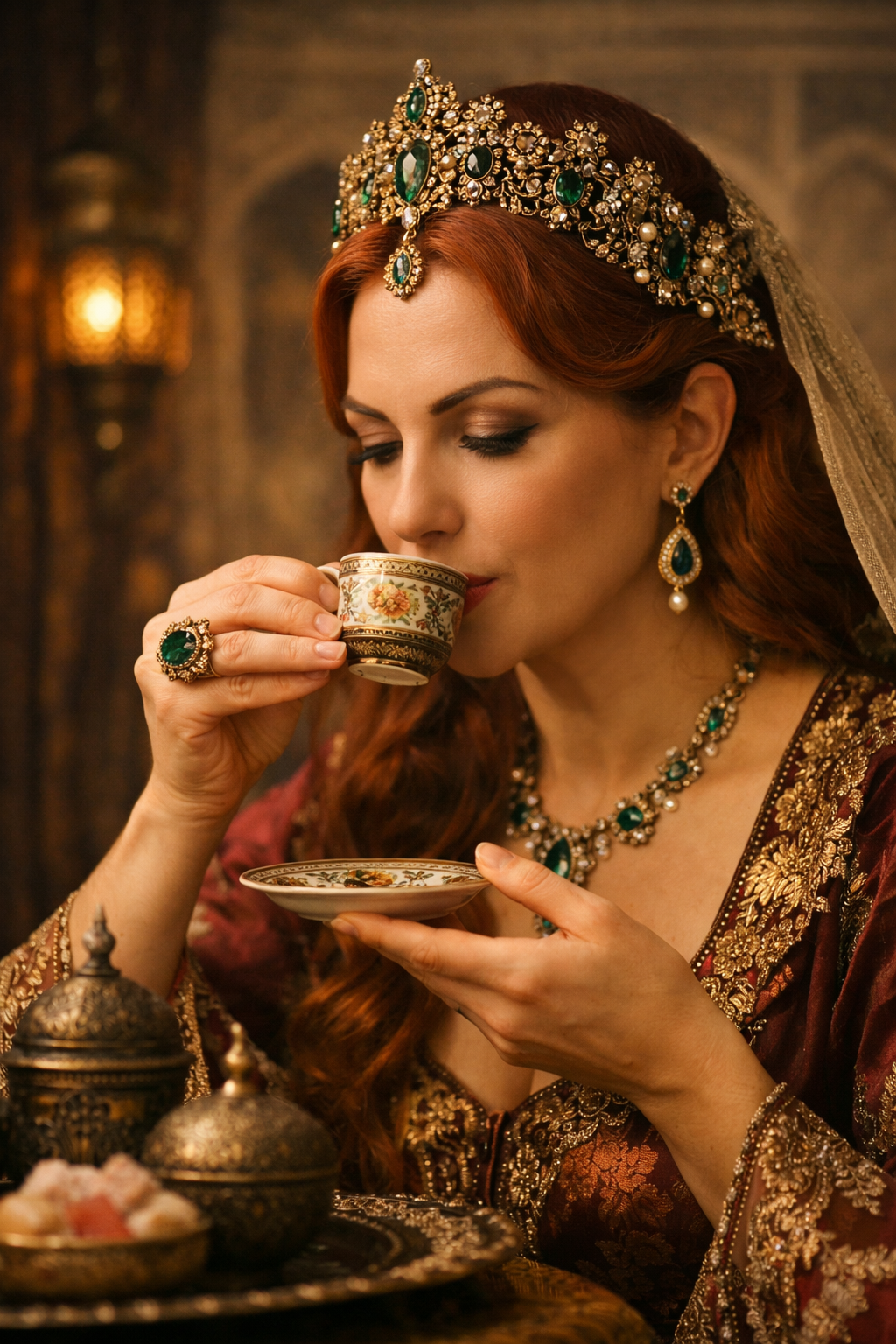
With a cup of Turkish coffee in hand, one question comes to mind:
what happened when coffee first arrived in the Ottoman Empire?
Today, coffee is part of everyday life.
But in the 16th century, it was considered something dangerous.
Why was coffee banned?
When coffee reached Istanbul, it spread rapidly among the people.
However, coffeehouses were not just places to drink coffee.
They were spaces where people talked, debated, and exchanged ideas.
For the state, this was seen as a potential threat.
As a result, during different periods:
Coffeehouses were closed
Drinking coffee was forbidden
Some people were punished for consuming it
What we casually say today — “let’s have a coffee” —
was once a banned habit.
Who was served coffee in the Ottoman palace?
In the Ottoman palace, coffee was not served to everyone.
It was reserved for special moments and important people.
Coffee was offered to:
The sultan
The Valide Sultan
The Haseki Sultan
High-ranking state officials
On special occasions, foreign ambassadors
Serving coffee was a sign of respect and prestige.
Coffee was usually served after meals, during private meetings or calm palace moments, helping conversations continue in a relaxed atmosphere.
How did Kanuni Sultan Suleiman and Hürrem Sultan drink coffee?
During Kanuni’s reign, coffee had become an established palace tradition.
Kanuni Sultan Suleiman preferred his coffee:
With little or no sugar
Simple and balanced
During moments of reflection
For him, coffee helped clear the mind.
Hürrem Sultan, on the other hand:
Preferred a smoother taste
Always accompanied by sweets or Turkish delight
Treated coffee as part of conversation and intimacy
For her, presentation was just as important as flavor.
Did coffee fortune-telling exist in the palace?
Yes — but not as an official ritual.
Coffee fortune-telling in the palace:
Was informal and recreational
Practiced mostly among palace women
Never influenced political decisions
It was a social tradition, driven by curiosity and imagination.
More than just coffee
In the Ottoman palace, coffee was consumed slowly and quietly.
It was never rushed.
Perhaps this is why Turkish coffee is still associated with patience, tradition, and meaning.
When coffee reached Istanbul, it spread rapidly among the people.
However, coffeehouses were not just places to drink coffee.
They were spaces where people talked, debated, and exchanged ideas.
For the state, this was seen as a potential threat.
As a result, during different periods:
Coffeehouses were closed
Drinking coffee was forbidden
Some people were punished for consuming it
What we casually say today — “let’s have a coffee” —
was once a banned habit.
Who was served coffee in the Ottoman palace?
In the Ottoman palace, coffee was not served to everyone.
It was reserved for special moments and important people.
Coffee was offered to:
The sultan
The Valide Sultan
The Haseki Sultan
High-ranking state officials
On special occasions, foreign ambassadors
Serving coffee was a sign of respect and prestige.
Coffee was usually served after meals, during private meetings or calm palace moments, helping conversations continue in a relaxed atmosphere.
How did Kanuni Sultan Suleiman and Hürrem Sultan drink coffee?
During Kanuni’s reign, coffee had become an established palace tradition.
Kanuni Sultan Suleiman preferred his coffee:
With little or no sugar
Simple and balanced
During moments of reflection
For him, coffee helped clear the mind.
Hürrem Sultan, on the other hand:
Preferred a smoother taste
Always accompanied by sweets or Turkish delight
Treated coffee as part of conversation and intimacy
For her, presentation was just as important as flavor.
Did coffee fortune-telling exist in the palace?
Yes — but not as an official ritual.
Coffee fortune-telling in the palace:
Was informal and recreational
Practiced mostly among palace women
Never influenced political decisions
It was a social tradition, driven by curiosity and imagination.
More than just coffee
In the Ottoman palace, coffee was consumed slowly and quietly.
It was never rushed.
Perhaps this is why Turkish coffee is still associated with patience, tradition, and meaning. Tours mentioned in this post