Istanbul: The City That Empires Fought For
February 13, 2026
By
Admin User
1238
views
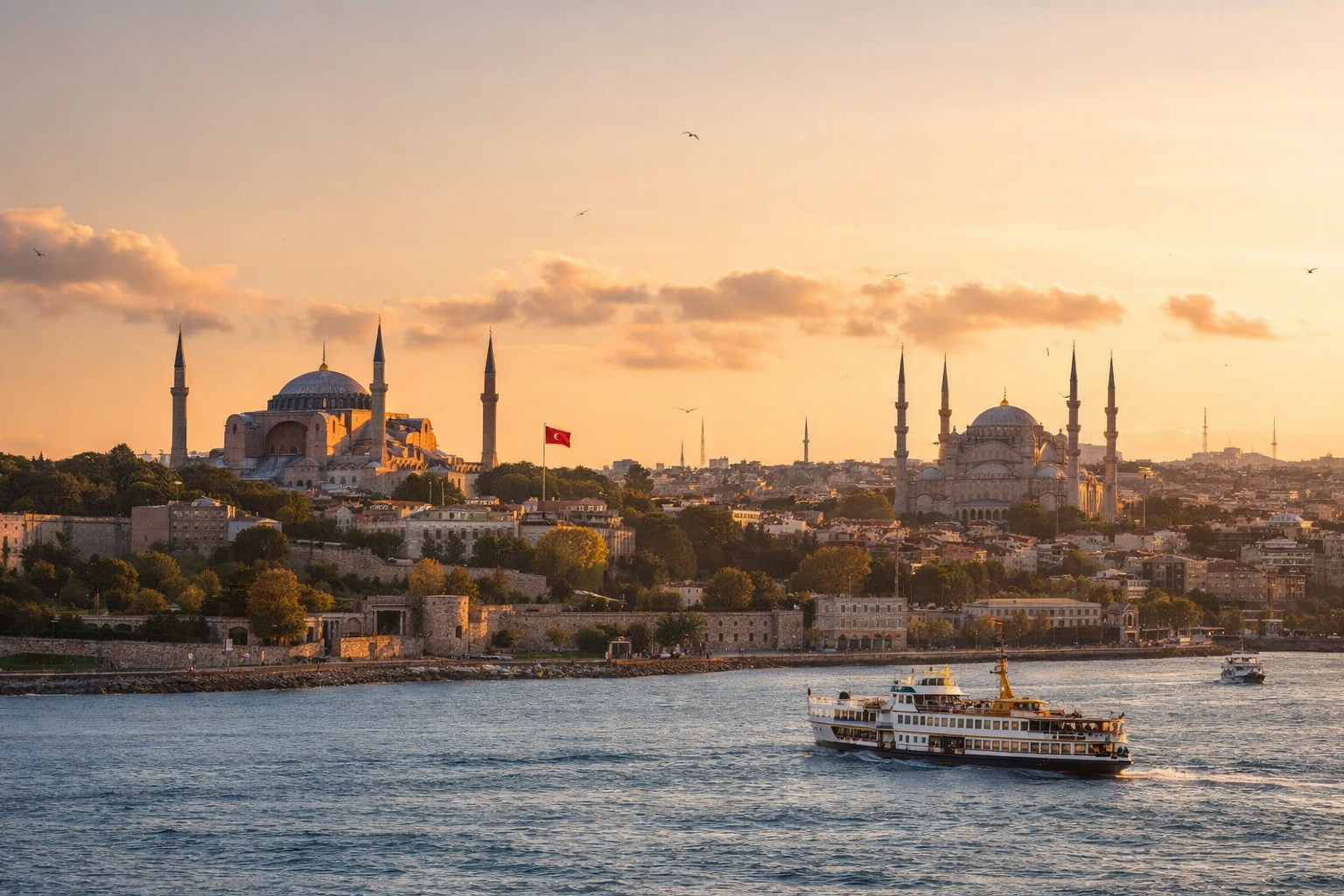
A City More Than a Destination
Some cities are visited.
Others are experienced.
Istanbul belongs to the second kind.
For thousands of years, this city has been the prize of empires,
a meeting point of religions,
a stage for sieges, prayers, ambitions, and power.
Istanbul is not just a city.
It is a turning point of history.
From Byzantion to Constantinople: The Birth of a Legend
The story of Istanbul begins in the 7th century BCE.
Greek settlers from Megara founded a city called Byzantion,
near today’s Sarayburnu.
The choice of location was no coincidence.
Ancient sources describe it as
“the land opposite the blind” —
a reference to those who failed to recognize its extraordinary strategic value.
Centuries later, Roman Emperor Constantine the Great saw what others had missed.
He rebuilt the city and gave it a new name:
Constantinople — the New Rome.
From that moment on, Istanbul became:
The capital of the Eastern Roman Empire
The political and spiritual center of Christianity
One of the most powerful cities in the world
A City Under Siege: The Dream of Conquerors
Throughout history, Istanbul was attacked repeatedly.
Persians, Arabs, Crusaders, and rival empires all desired the same prize:
control of the city that controlled the world.
Yet for centuries, the city remained unconquered.
Why?
Because Istanbul was not defended by armies alone —
it was protected by geography, engineering, and vision.
The Walls: Stone, Strategy, and Survival
The city’s greatest defense was its walls.
The Theodosian Walls, built in the 5th century, were among the most advanced fortifications of the ancient world.
They featured:
Multiple defensive layers
Towers, gates, and moats
A design that stopped countless armies
For generations, these walls earned Istanbul a reputation as
“the city that could not be taken.”
Until 1453.
Capital of Empires
Istanbul served as the capital of three great empires:
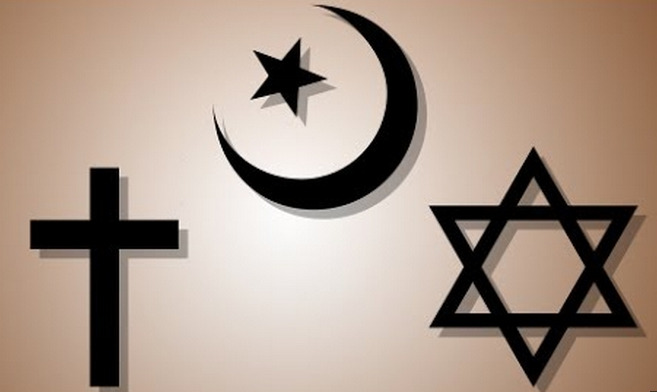
🏛 Roman Empire
✝ Byzantine Empire
☪ Ottoman Empire
Each empire reshaped the city,
but none erased what came before.
Instead, Istanbul absorbed every layer —
architecture, belief, culture, and power —
and turned them into something unique.
Geography and Geopolitics: Where Worlds Collide
Istanbul’s true power lies on the map.
Between Europe and Asia
Between the Black Sea and the Mediterranean
At the crossroads of major trade routes
To control Istanbul meant:
Controlling trade
Controlling military movement
Controlling access between continents
It was never just about ruling a city —
it was about shaping global balance.
A Sacred City: Faith and Spirit
For centuries, Istanbul has been a sacred center.
A patriarchal seat for Christianity
A capital of Islam and later the caliphate
A place of refuge for Jewish communities
Church bells, calls to prayer, and whispered supplications
once echoed through the same streets.
This coexistence gave Istanbul not only religious importance,
but a profound spiritual depth.
Economic Power: The Wealth of the Golden Horn
The Golden Horn was one of the safest natural harbors in the ancient world.
Through this inlet passed:
Silk
Spices
Gold
Ideas
Istanbul was not merely a marketplace of goods,
but a marketplace of civilizations.
1453: The City Changes Hands, History Changes Course
In 1453, Mehmed II, known as the Conqueror, captured the city.
This was more than a military victory.
The Middle Ages came to an end
A new era began
Istanbul became the heart of the Ottoman world
Yet the city was not destroyed.
It was preserved, rebuilt, and transformed.
Why Istanbul Still Matters
Today, Istanbul remains:
A geopolitical key
A cultural mosaic
A spiritual crossroads
A living archive of history
That is why Istanbul is not simply visited.
It is felt.
Tours mentioned in this post

Related Posts
The Walls and the Sieges: Why Istanbul Was Almost…
Feb 13, 2026
Behind the Scenes of 1453: How Constantinople Fell
Feb 13, 2026