The Walls and the Sieges: Why Istanbul Was Almost Impossible to Conquer
February 13, 2026
By
Admin User
978
views
For centuries, Istanbul was not protected by walls.
It was defined by them.
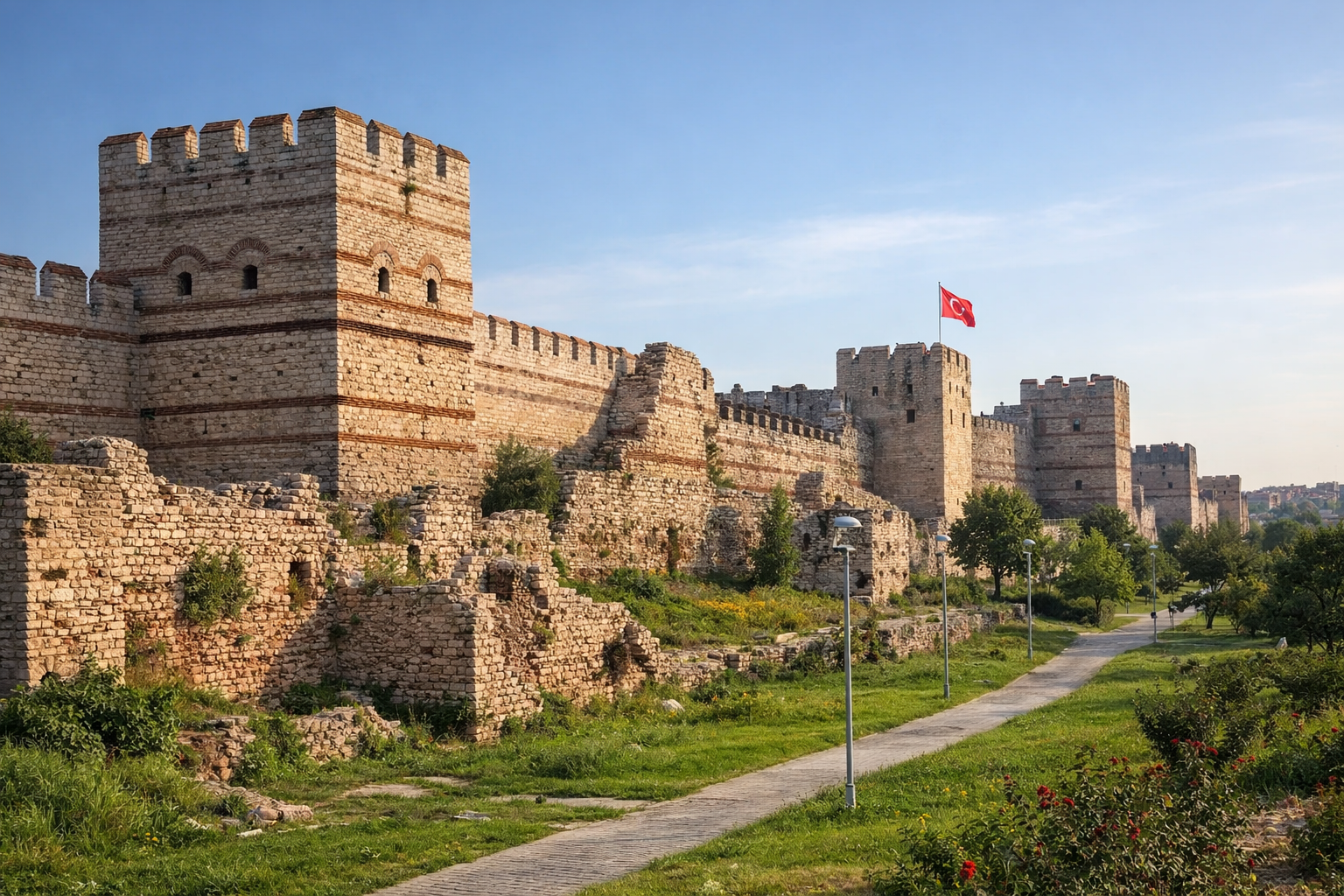
The city’s legendary defenses—especially the Theodosian Walls—were among the most sophisticated military structures ever built. Stretching over 6.5 kilometers along the land side, this triple-layered system included:
A deep defensive moat
An outer wall with towers
A massive inner wall rising up to 12 meters high
This design allowed the city to withstand dozens of sieges over more than a millennium.
Empires came prepared.
Most left defeated.
From Avars and Arabs to Bulgars and Crusaders, attackers repeatedly failed to breach the walls. Even when Constantinople was surrounded by massive armies, the city survived through a combination of engineering brilliance, strategic geography, and disciplined defense.
The sea walls added another layer of protection. The Golden Horn, guarded by a massive iron chain, prevented enemy fleets from entering the harbor. From the Bosphorus to the Sea of Marmara, Istanbul was shielded by both stone and water.
But the walls were not just physical barriers.
They were psychological weapons.
To stand before them was to face the idea that this city was chosen—protected by history, faith, and destiny. Many sieges ended not because attackers ran out of soldiers, but because they ran out of hope.
Yet no wall is eternal.
By the 15th century, gunpowder artillery began to challenge ancient defenses. Cannons would eventually rewrite the rules of warfare—and prepare the stage for the most famous siege in history.
But until then, Istanbul remained the city that refused to fall.
Tours mentioned in this post

Related Posts
Behind the Scenes of 1453: How Constantinople Fell
Feb 13, 2026
8 Magnificent Ottoman Palaces in Istanbul You Must…
Feb 02, 2026